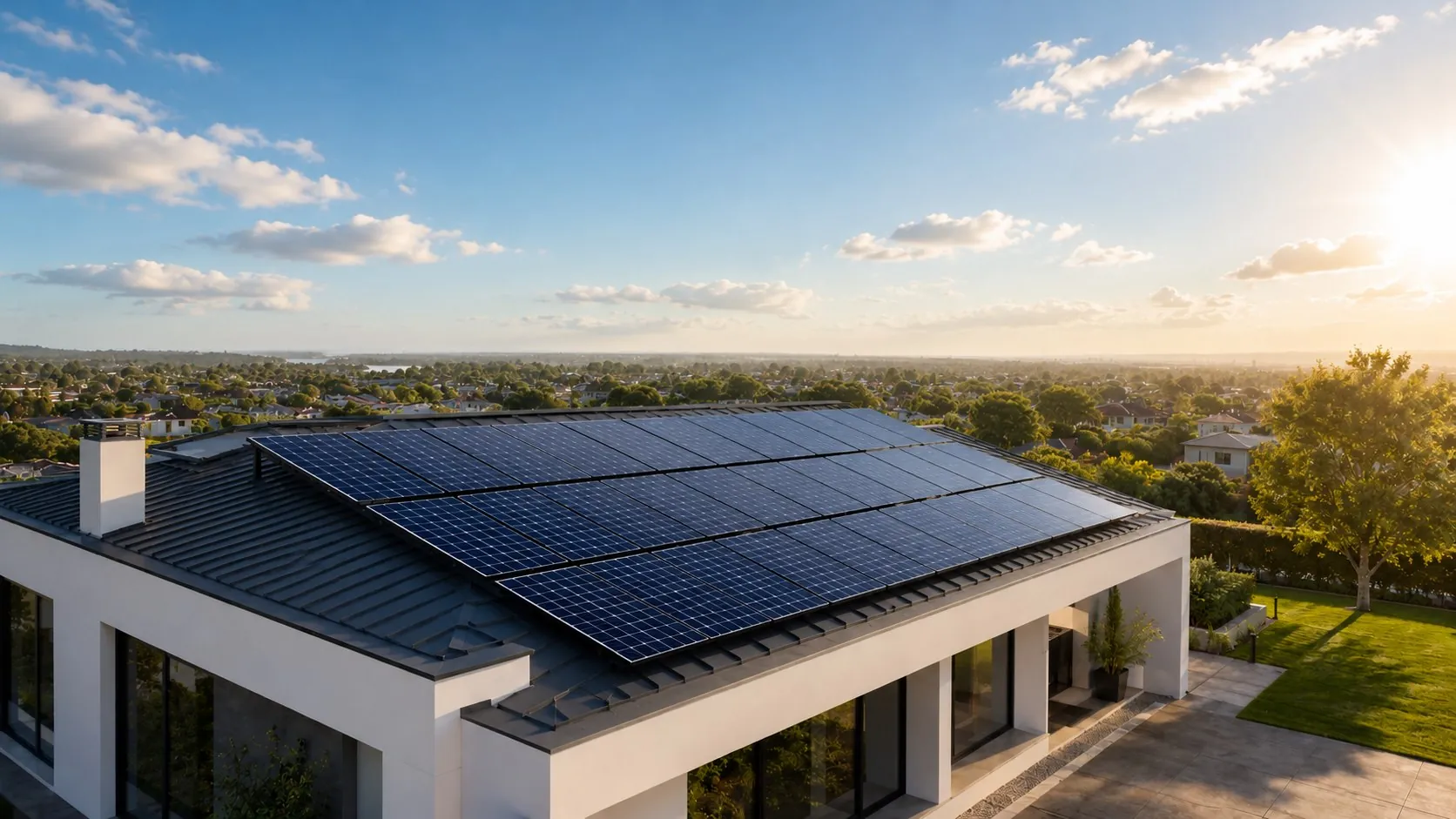
A solar module is not one large light sensor. It is an array of individual cells wired in series, and a series circuit is governed by its weakest element. When one cell is shaded it stops being a source and starts being a restriction on everything connected through it.
Depending on the module architecture and where the shadow falls, a single local obstruction can reduce output from a wider electrical section than the shadow itself covers. That is why a bird dropping the size of a coin, or the shadow of a satellite dish bracket, can show up in a day's generation figures out of all proportion to its area.
Conventional modules manage this with bypass diodes, which route current around an affected group of cells. The protection works, but it is coarse: the bypassed section is far larger than the shaded spot.
What causes shade on an Ethiopian roof
Trees are the first and most persistent source. Eucalyptus is planted throughout Addis Ababa and across the highlands, it grows tall and fast, and it throws a moving shadow that crosses different cells through the day and lengthens with the seasons. A tree that clears the roof in June may not clear it in December.
Urban plots create the second. Compound walls, neighbouring buildings and rooftop water tanks are fixed obstacles, and a fixed obstacle produces a repeatable shade pattern at the same hours every day. On a dense plot this is often more significant than the trees, and it is easier to design around because it does not move.
Then there is the one owners consistently underestimate, because it is not architectural at all. Through the dry months, roughly December to February, dust settles steadily on every horizontal surface, and patchy contamination reduces the light reaching selected cells. Leaves and bird droppings do the same thing more locally. This category is by some distance the cheapest of the three to fix, which is a large part of why scheduled cleaning appears in every maintenance plan, and why those plans are built around a pre-rain and post-rain schedule rather than an arbitrary calendar.
What cell-level optimisation changes
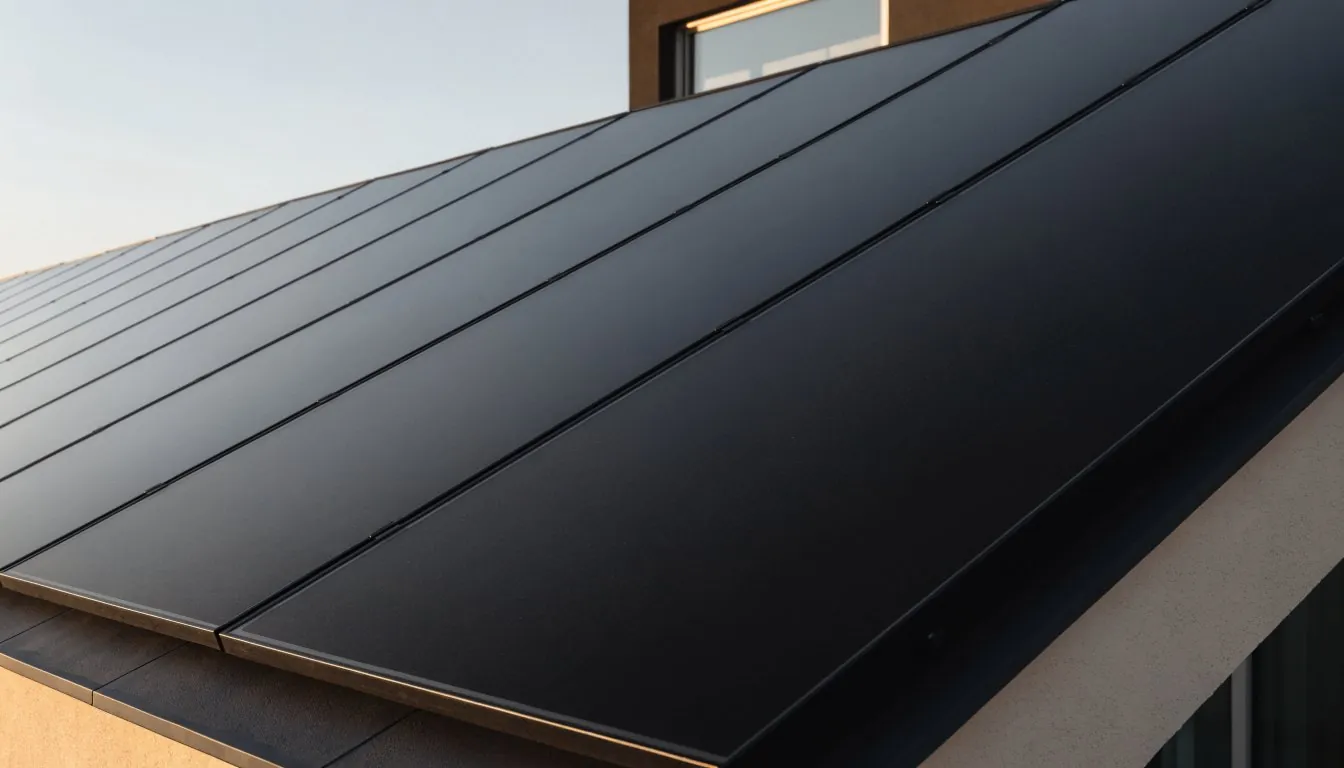
The N-Type back-contact platform used in SunCrown™ and SunCrown Black™ is designed so that a small shaded area does not cause unnecessary loss across a much larger part of the module. The shade still reduces output. What changes is how far that reduction spreads.
In sequence: shade reaches one local area, the affected cell contributes less power, the optimisation limits unnecessary wider loss, and more of the unshaded area keeps generating. SunCore™, on the N-Type TOPCon platform, uses standard bypass-diode protection without specialised cell-level optimisation.
The part nobody mentions
A shaded cell does not simply produce less. It can become hotter than the cells around it, because it is dissipating energy rather than delivering it. Sustained local heating is a long-term reliability concern rather than a daily one.
The back-contact platform includes high-temperature restriction designed to limit excessive hotspot temperatures, which helps reduce thermal stress and supports safer, more dependable operation. On a roof with permanent recurring shade, this matters more across twenty years than the generation figure does across one.
Design beats technology
No cell architecture rescues a badly planned array, and it is worth being blunt about that. Shade should be assessed first, modelling recurring shade from trees, compound walls, water tanks and neighbouring structures across the day and across the seasons, before the array is finalised. The layout then works around it, keeping permanently shaded areas clear of modules where possible and selecting suitable string and inverter design for what remains.
After that comes maintenance, removing leaves, heavy dust and bird droppings safely and at sensible intervals, which is the cheapest output anyone will ever recover. And before purchase, the datasheet confirms the exact model, ratings, warranty, installation limits and certification.
Choosing a shade-tolerant panel for a roof that was never surveyed is paying a premium to partly compensate for a design decision that could have been made properly for nothing.
Common questions
Does shade on one panel affect the whole system?
It can affect more than the shaded area, because cells and modules are electrically connected. How far the effect spreads depends on module architecture, string design and where the shadow falls, which is why layout and inverter design are assessed during the survey.
Do I still need cell-level optimisation if I clean my panels?
Cleaning removes dust, leaves and droppings. It cannot remove a eucalyptus tree, a compound wall or a neighbour's water tank. Cell-level optimisation addresses recurring structural shade; cleaning addresses the accumulating kind. Most roofs with both problems benefit from both.
Will SunCrown panels give me 30% more energy?
No, and the figure should not be read that way. The 30% result comes from a controlled TÜV Nord comparison with one solar cell fully shaded, measuring module power under defined test conditions. Actual annual energy depends on shade size, position, duration, system design, temperature and weather.
Is solar worth it if my roof has trees nearby?
Usually yes, provided the shade is assessed properly and the array laid out around it. A shading assessment during the site survey shows which roof areas are viable and whether shade-optimised panels are justified in your particular case.
How much does dry-season dust cost me?
It varies with location and exposure, but dust behaves like diffuse shade across the whole module and it accumulates unnoticed. It is the main reason scheduled panel cleaning appears in every Lewis AMC plan, on a pre-rain and post-rain schedule built around local seasonal conditions.