Most people size a battery by taking the monthly bill, converting it to a daily figure and buying something close to it. That reasoning produces a battery roughly twice the size it needs to be, because a large share of daily consumption happens while the sun is up and the panels are already covering it.
A battery exists to move energy across time. It only does work between the moment generation stops and the moment it starts again, plus whatever an outage demands. Everything beyond that is capacity you paid for and never cycle.
The method
Start by listing what runs after dark: lighting, television, the router, refrigeration overnight, fans, phone and laptop charging, any pump on a timer. Convert each one to kilowatt hours by multiplying watts by hours and dividing by a thousand. A 60 W fan running six hours is 0.36 kWh. A fridge drawing an average 80 W across fourteen overnight hours is about 1.1 kWh.
Add them up. For a typical family home the evening and overnight total usually lands between 3 and 8 kWh. Then add your outage requirement on top. If you want a full day of essential loads carried through an interruption, add that day's essential total, remembering that daytime solar will be recharging the battery during the outage, so the addition is smaller than it first looks.
The mitad question
Any honest discussion of battery sizing in Ethiopia has to deal with injera baking, because it dominates the household load curve in a way nothing else does.
A conventional electric mitad is rated at roughly 3.5 to 4 kW, which makes it the most energy-consuming appliance in most Ethiopian homes by a wide margin. It is why lights visibly dim during baking, and why households generally avoid running water heaters or other heavy appliances at the same time.
Two consequences follow, and they pull in opposite directions. First, the mitad should not be on the backup circuit. A single baking session would consume a large share of a 10 kWh battery, leaving nothing for lighting and refrigeration, which are the loads that actually need to survive an outage.
Second, and more usefully, baking during daylight is one of the best things a solar household can do. If the mitad runs while the panels are producing, a significant share of that energy comes straight from the roof rather than from the grid or from storage. Shifting baking to the middle of the day, where the household routine allows it, changes the economics of the whole system more than a larger battery would.
The three capacities
| MODEL | CAPACITY | RATING | INSTALLATION | DESIGNED FOR |
|---|---|---|---|---|
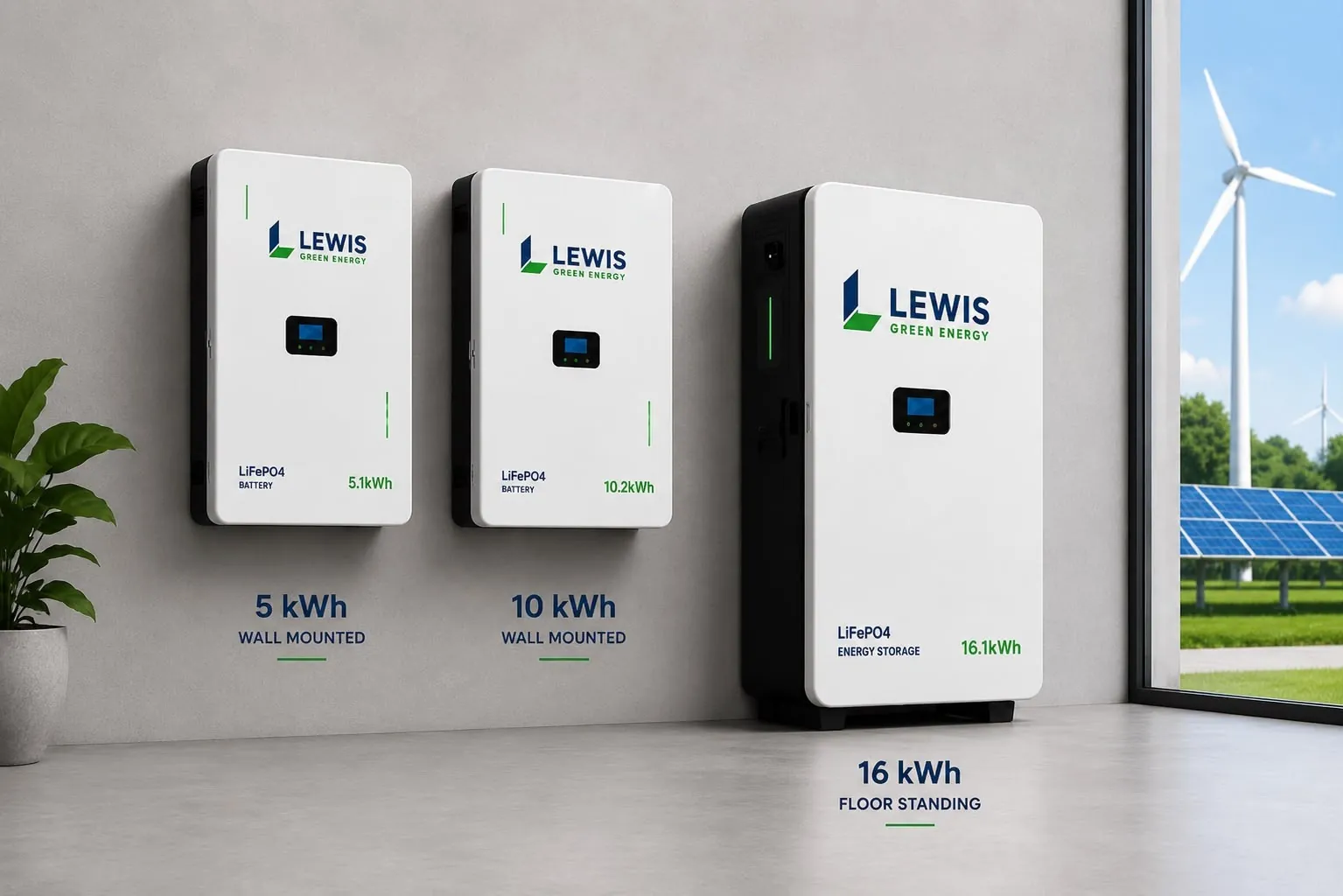
| TerraVault™ 5 | 5.12 kWh | 100 Ah | Wall-mounted | Smaller homes, starter solar systems and selected essential loads |
| TerraVault™ 10 | 10.24 kWh | 200 Ah | Wall-mounted | Family homes, evening energy use and broader backup requirements |
| TerraVault™ 16 | 16 kWh | 314 Ah | Floor-standing | Larger homes, small businesses and properties with greater energy needs |
TerraVault Max™ is available in the same three capacities and adds an integrated touch display and Wi-Fi connectivity for on-unit and remote visibility, subject to a compatible inverter or monitoring platform and the selected system configuration.
What the specification tells you
Two things on a battery datasheet decide how it will age. The first is chemistry. TerraVault™ uses LiFePO₄, lithium iron phosphate, with selected REPT energy-storage cells. It is the chemistry most modern residential and commercial storage is built on, chosen for stable operation rather than the highest possible energy density. In a battery that will sit on a wall for a decade, stability is the property that matters.
The second is the current rating. The 100, 200 and 314 Ah figures are what the capacities are built from at a nominal 51.2 V, and they also carry an installation consequence: the 5 and 10 kWh units are wall-mounted while the 16 kWh unit is floor-standing. That is a site question as much as an energy one, and it is worth raising early if wall space is limited.
Four mistakes worth avoiding
Sizing from the bill instead of the evening is the most common and the most expensive. Forgetting the inverter is the next: capacity tells you how long, while the inverter's backup rating tells you how much at once, and a large battery behind an undersized backup rating will not start a heavy load however full it is.
Putting cooking or water heating on the backup circuit is the third, for the reasons set out above. And the fourth is buying for a house you do not yet have. If an extension or an electric vehicle is genuinely twelve months away, design the system for it now. If it is a maybe, size for the house you live in and leave the headroom to the inverter.
Where the battery sits in the system
A battery only works alongside an inverter that can charge and discharge it, which means PowerSync™ for a hybrid system or PowerGuard™ for off-grid, both from 5 to 20 kW. Compatibility is not assumed from two items appearing on the same quotation. It depends on battery voltage, BMS communication and system design, and it is confirmed against the approved compatibility list.
Lewis warranty on the battery is five years as standard, extending to up to seven years under the Premium package, subject to the selected model, product registration and applicable warranty terms.
Common questions
How many kWh of battery does an average home need?
Most family homes land between 5 and 10 kWh once evening and overnight consumption has been added up and an outage allowance included. The figure should come from your own load list rather than an average, which is what the site survey measures.
Can a home battery run an electric mitad?
It is not what storage is for. A mitad draws roughly 3.5 to 4 kW and would consume a large share of a typical home battery in one session. The better approach is to bake during daylight, so the load is met by solar generation directly, and to keep the battery for lighting, refrigeration and connectivity.
Is a bigger battery always better?
No. Capacity you never discharge is capacity you paid for and do not use. The right size covers your evening consumption plus the essential loads you want protected, with a margin rather than a multiple.
What is the difference between TerraVault and TerraVault Max?
Both are LiFePO₄ batteries with selected REPT cells, available at 5.12, 10.24 and 16 kWh. TerraVault Max adds an integrated touch display and Wi-Fi connectivity for on-unit status and remote monitoring through a compatible inverter or platform.
Can I add a second battery later?
Often yes, but it depends on the inverter, the battery voltage and how the original system was designed. If expansion is likely, say so at survey stage so the design leaves room for it rather than needing rework.