Almost every solar quotation you will be shown is one of three system types. They often use the same panels and the same battery. What separates them is the inverter, and the inverter is what decides whether your lights stay on when the grid does not.
Getting this choice wrong is expensive in both directions. Buy an on-grid system and you will discover during the first outage that it shuts down along with the grid. Buy an off-grid system for a property with a perfectly good supply and you have paid for independence you were never going to use. It is worth twenty minutes of thought before you look at a single price.
On-grid solar
An on-grid system connects your panels to your property and to the utility supply. During daylight the inverter converts what the panels generate and your appliances use it first. There is no battery, so there is nothing to store and nothing held back for later.
This is the lowest-cost route to lower daytime bills. For a property with a stable supply and mostly daytime consumption it is frequently the right answer. An office that runs from eight to six, a shop, a workshop: all of them consume power at exactly the hours the sun is producing it, so most of what is generated is used directly.
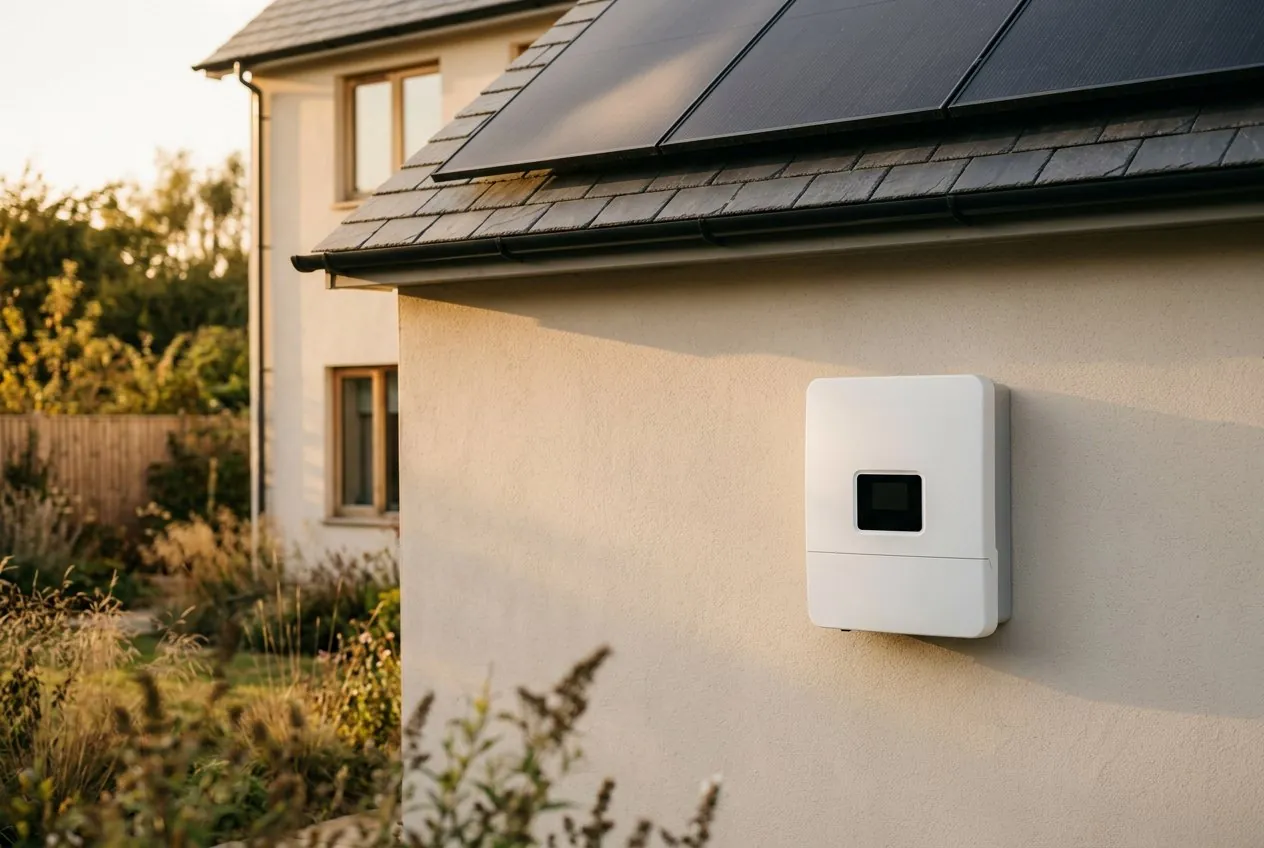
The limitation is not a flaw but a safety rule. An on-grid inverter stops supplying power the moment the grid goes down, and it is not permitted to do otherwise. The reason is that it would otherwise keep pushing electricity into lines that a utility engineer may be working on. GridMax™ is the Lewis inverter built for this case, and it does not require a battery.
Hybrid solar
A hybrid system adds a battery and an inverter that can manage four things at once: the panels, the battery, the grid, and a backup circuit that keeps running when the grid does not. Surplus daytime generation goes into storage rather than being wasted, and comes back out after sunset or during an interruption.
For most homes this is the sensible configuration, because a home does the opposite of an office. Consumption is lowest around midday and highest in the evening, which is precisely when generation has stopped. Without storage a home system gives away its best hours and then buys electricity back after dark.
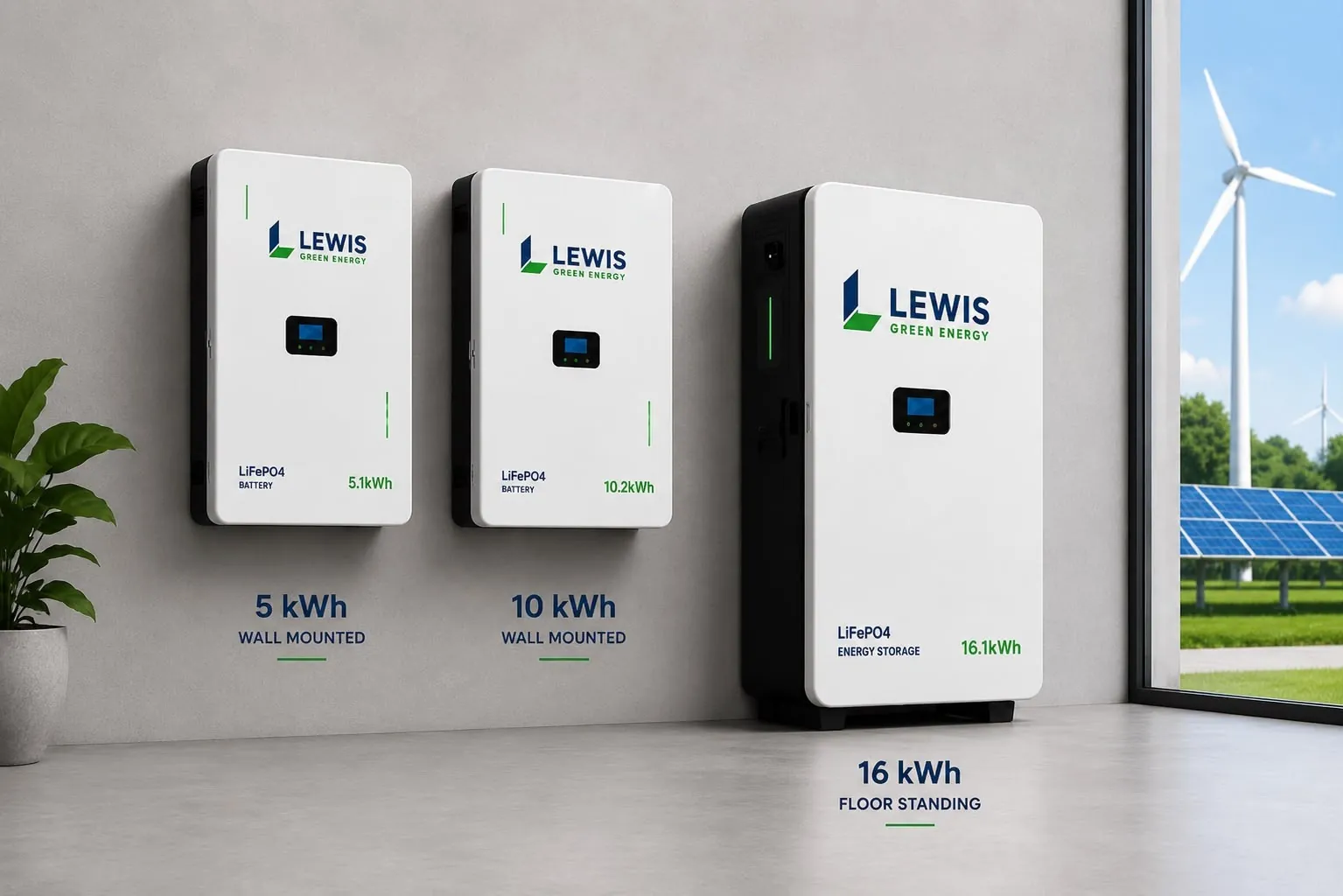
PowerSync™ covers this, from 5 to 20 kW in selected low and high voltage, single and three-phase configurations, working with compatible TerraVault™ and TerraVault Max™ batteries. Backup capacity, phase and battery compatibility depend on the model and the system design, all of which is settled during the survey rather than assumed from a brochure.
Off-grid solar
An off-grid system treats solar and storage as the primary supply rather than a supplement. It is built for properties where mains electricity is unavailable, severely limited or too unreliable to plan around.
In Ethiopia that covers a great deal of ground beyond the main towns: farms and commercial agriculture, lodges, rural health posts and clinics, schools, water pumping, telecoms sites and businesses sitting at the edge of the distribution network. For these the utility supply is not the baseline that solar supplements, it is the thing that was never dependably there.
The engineering is genuinely different. Sizing has to cover the worst realistic day rather than the average one, because there is no utility supply to absorb a shortfall. Most off-grid designs also allow for a generator as a last-resort input, used rarely but available when a long run of poor weather meets high demand. PowerGuard™ is the Lewis range for this, from 5 to 20 kW in selected single and three-phase, low and high voltage configurations, with optional compatible generator support.
How to decide
Three questions usually settle it. Does your supply fail often enough to matter, meaning often enough that you change your behaviour around it? If it does, you need storage, which means hybrid or off-grid. When do you actually use electricity, and is most of it between roughly nine and five? If it is, on-grid captures most of the benefit and a battery adds cost without much work to do. And could you operate without the utility supply at all? If the honest answer is that there is no usable supply, the design starts from off-grid and works backwards.
Worth adding a fourth for Ethiopian properties: how far are you from a service engineer? Grid reliability varies considerably between central Addis, regional towns and rural woredas, and so does the practicality of getting someone on site. The further out the property, the more the design should favour resilience and simplicity over cleverness.
| FEATURE | ON-GRID, GRIDMAX™ | HYBRID, POWERSYNC™ | OFF-GRID, POWERGUARD™ |
|---|---|---|---|
| System type | On-grid solar inverter | Solar, battery and grid | Solar, battery and optional generator |
| Battery | Not required | Compatible TerraVault™ or TerraVault Max™ | Compatible TerraVault™ or TerraVault Max™ |
| Power during an outage | No, it shuts down automatically for electrical safety | Yes, for selected essential loads, subject to design | Yes, it is designed as the primary supply |
| Power range | According to selected model | 5 to 20 kW | 5 to 20 kW |
| Needs a utility connection | Yes, it cannot operate without one | Works with one and rides through its failure | No |
| Suited to | Reliable supply, daytime consumption, lowest entry cost | Most homes and small businesses needing evening power and backup | Farms, clinics, lodges and properties beyond dependable supply |
| Lewis warranty | Five years as standard, seven years with the Premium package, subject to model, registration and applicable terms | ||
The mistake that costs the most
Choosing on-grid because it is cheapest, and then discovering that solar and power during a cut are not the same thing. It is the most common disappointment in residential solar and it is entirely avoidable, because it is a design decision made on day one rather than an upgrade you bolt on afterwards.
If backup matters to you even slightly, say so during the survey. A hybrid inverter specified at the start costs far less than a hybrid inverter fitted two years later to replace a perfectly functional on-grid one.
Common questions
Can I add a battery to an on-grid system later?
Not usually without changing the inverter. An on-grid inverter such as GridMax™ is not designed to charge and discharge a battery or to run an isolated backup circuit, so adding storage later normally means replacing it with a hybrid unit. This is why the decision is best made at design stage.
Does a hybrid system still work if the battery is empty?
Yes. While the grid is available the system continues running on solar and grid power, and recharges the battery when there is surplus generation. An empty battery means no backup at that moment, not a system that has stopped.
Is off-grid more expensive than hybrid?
Usually, because it must be sized for the worst realistic day rather than the average one, which typically means more panels and more storage. It is the correct choice where there is no dependable supply to fall back on, rather than an ambitious version of hybrid.
What size inverter do I need?
It follows from your load profile, your roof area and whether you want backup, which is what the site survey measures. PowerSync™ and PowerGuard™ are available from 5 to 20 kW in selected single and three-phase configurations, so the range covers a small home through to a small commercial site.
Which type suits an unreliable grid rather than no grid at all?
Hybrid. It uses the utility supply when it is there, stores surplus solar while it is, and carries selected essential loads through interruptions. Off-grid is for properties where the supply is absent or so limited that designing around it is not realistic.